
Recent satellite imagery shows American military aircraft gathering at bases in the Middle East in one of the largest U.S. buildups this century, designed to pressure Iran into giving up its nuclear ambitions.
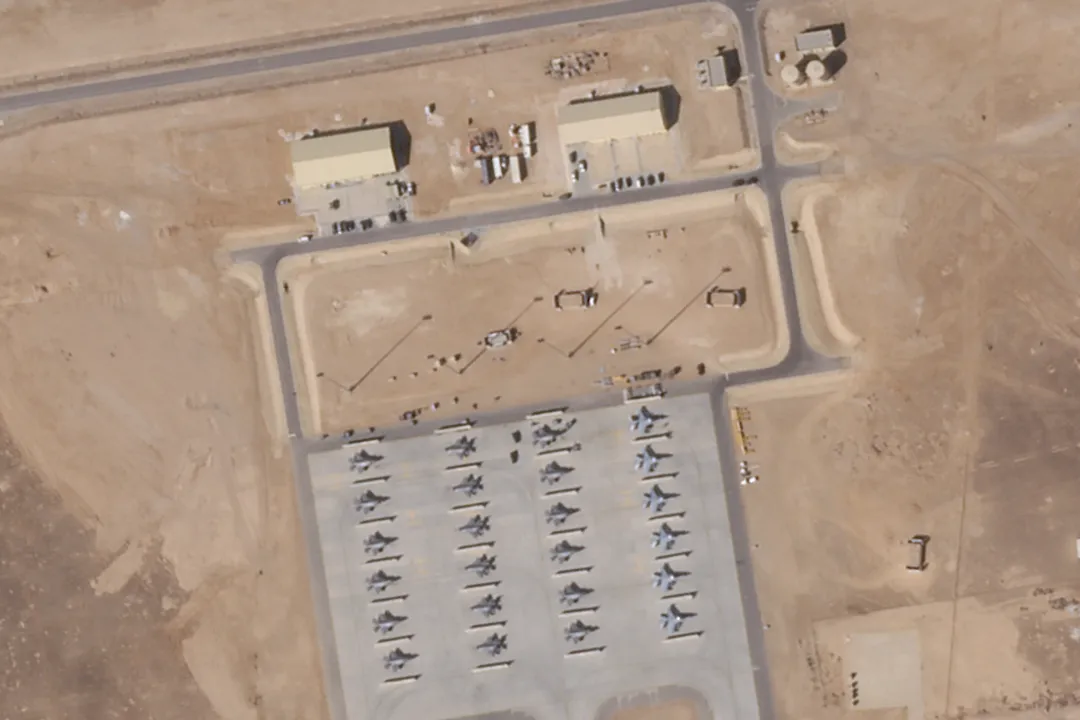
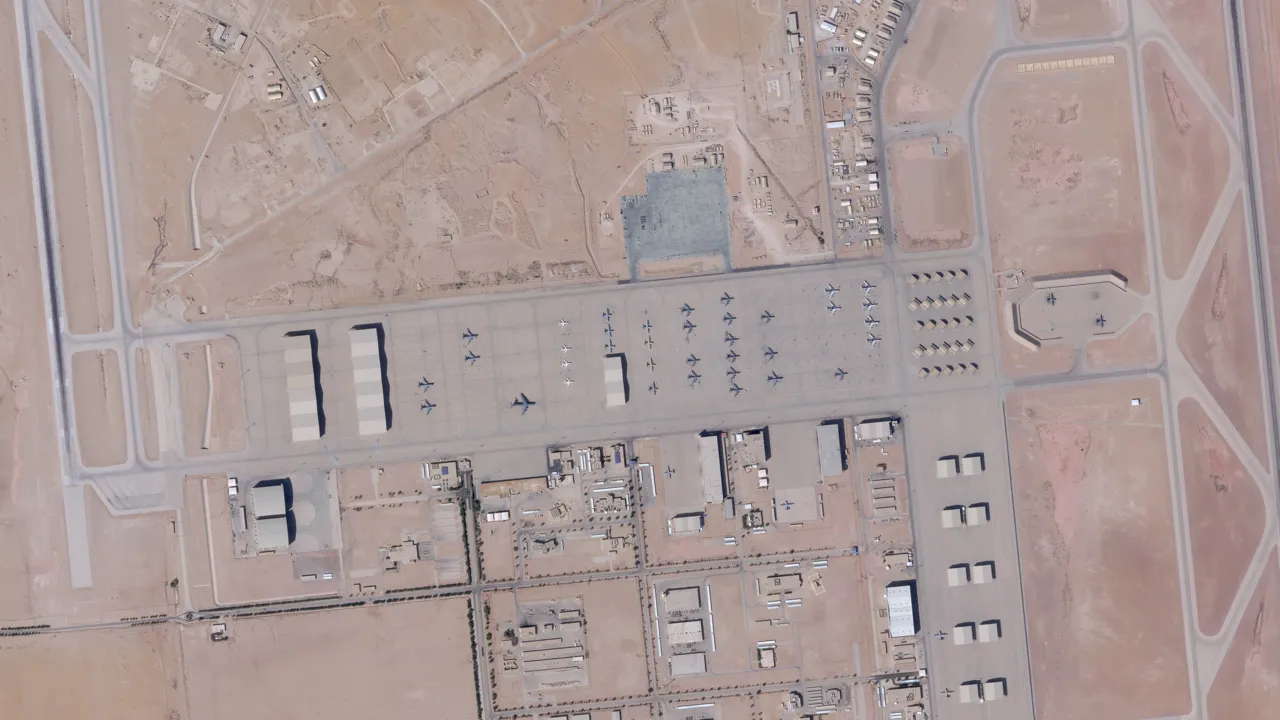
Photographs captured on February 21 and supplied to Newsweek by Planet showed F-35 and F-15 fighter jets among other combat and support aircraft at the Muwaffaq Salti Air Base in Jordan and at the Prince Sultan Air Base in Saudi Arabia.
The amassing of combat air power in the region—in plain sight of satellites operated by U.S. allies and adversaries alike—is a repeat of the Trump administration's military signaling used against Tehran last spring, and again against Caracas before Venezuelan President Nicolás Maduro was captured in early January.

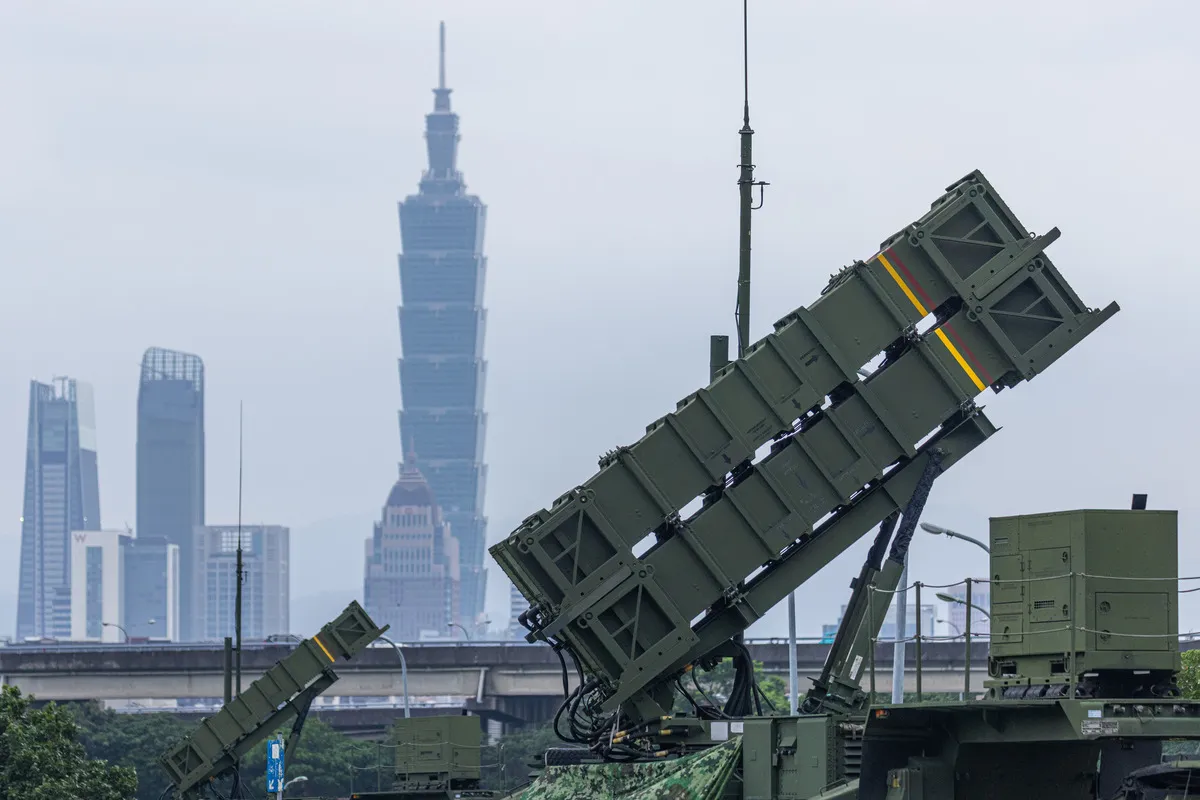
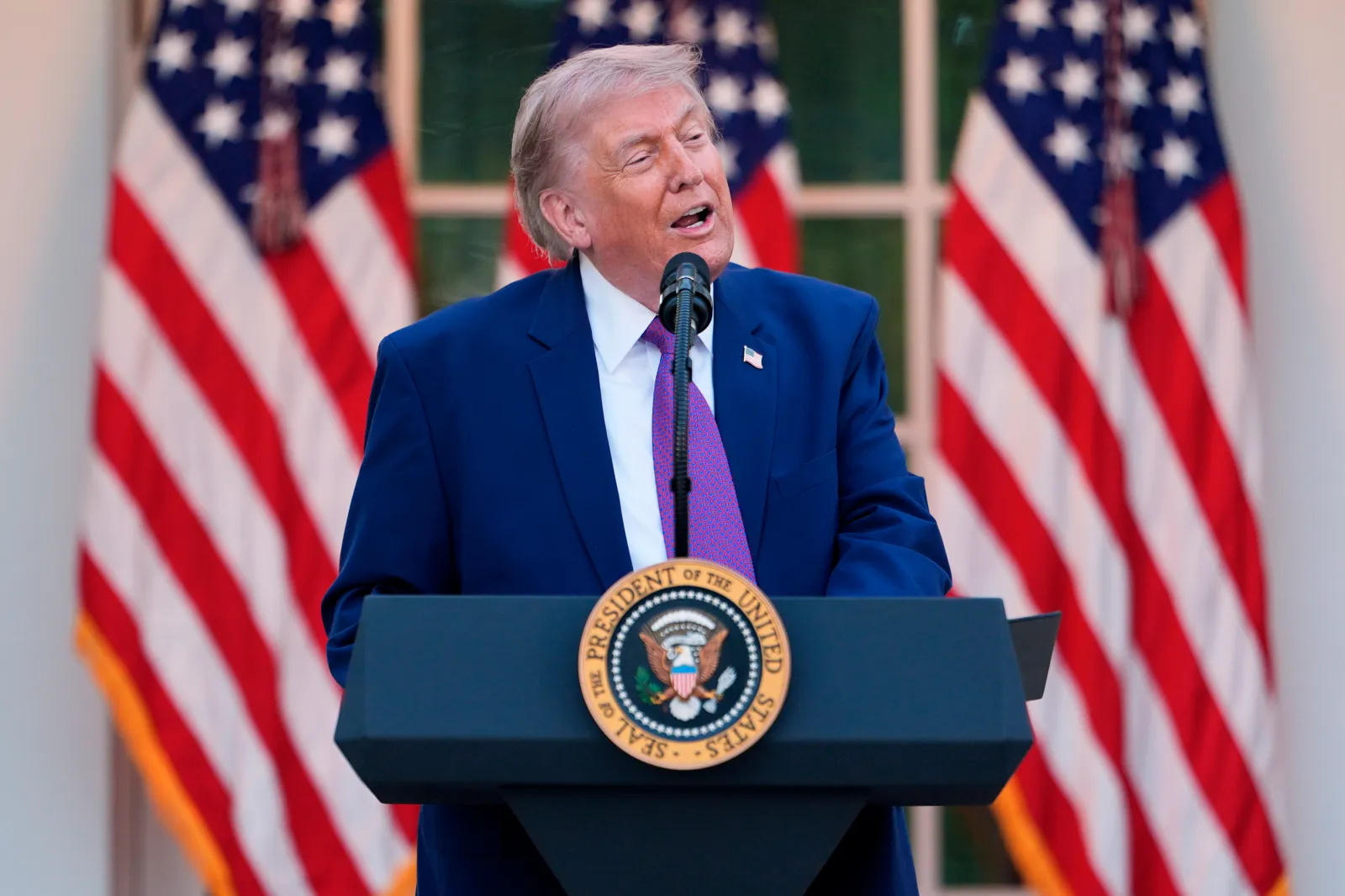
President Donald Trump last week gave Iran a hard deadline of 10 to 15 days to reach a new nuclear deal with the U.S., or "bad things will happen." The presence of U.S. forces on Iran's doorstep appears to demonstrate Trump's willingness to use force if necessary to achieve his foreign policy goals.
The U.S. and Iran were in talks earlier this month over how to settle their differences on the Iranian nuclear program, which Tehran insists is peaceful and civilian in nature.
Steve Witkoff, the U.S. special envoy to the Middle East, said on Sunday that Iran was "probably a week away" from enriching enough uranium to build a bomb. Tehran denies the accusation.
Last week, Abbas Araghchi, the Iranian foreign minister, called the military buildup "absolutely unnecessary and unhelpful." He warned that Iran would be compelled to strike U.S. bases in the region if attacked.
Open-source analysis estimates the U.S. has positioned close to 70 combat aircraft in Jordan, while the number in Saudi Arabia is also climbing. Both countries are major non-NATO allies to the U.S.—Jordan since 1996 and Saudi Arabia since January.
The U.S. jets seen on the ground are complemented by a growing number of naval vessels arriving in the region. They include the aircraft carriers USS Abraham Lincoln and USS Gerald R. Ford, both of which are sailing with carrier air wings, including planes designed for electronic warfare and to provide early warning against enemy aircraft or missiles.
The carrier groups' destroyer escorts are also equipped for ballistic missile defense and may be called upon to intercept Iranian missiles. Tehran says its longest-range weapon now in service can hit targets over 1,200 miles away—enough to reach most U.S. bases in the Middle East.
The current U.S. "armada" in or near the Middle East comprises 18 surface ships, including two carrier groups, and is the largest in the region since Operation Iraqi Freedom in 2003, according to analysis by the Center for Strategic and International Studies, a Washington think tank.
"The force is capable of punitive strikes on Iran and protection of U.S. allies and partners in the region. However, it lacks Marines, special operations forces (SOF) for raids or ground operations, and the logistics for an extended air campaign. It is also far smaller than what the United States used in 1991 and 2003 against Iraq for major combat operations and regime change," analysts Mark Cancian and Chris Park wrote in an assessment last week.
"The available forces are also insufficient for regime change beyond limited targeted strikes. It is unlikely that the United States will attack Iranian leaders, given concerns about retaliation and legitimacy," the authors said.
They concluded: "Finally, there are not enough forces for an extended, multi-week air campaign. That would require a substantial logistical buildup, which is possible but would take additional time."
Update 2/25/26, 1:55 a.m. ET: Added latest CSIS figures.
In a polarized era, the center is dismissed as bland. At Newsweek, ours is different: The Courageous Center—it's not "both sides," it's sharp, challenging and alive with ideas. We follow facts, not factions. If that sounds like the kind of journalism you want to see thrive, we need you.
When you become a Newsweek Member, you support a mission to keep the center strong and vibrant. Members enjoy: Ad-free browsing, exclusive content and editor conversations. Help keep the center courageous. Join today.

